
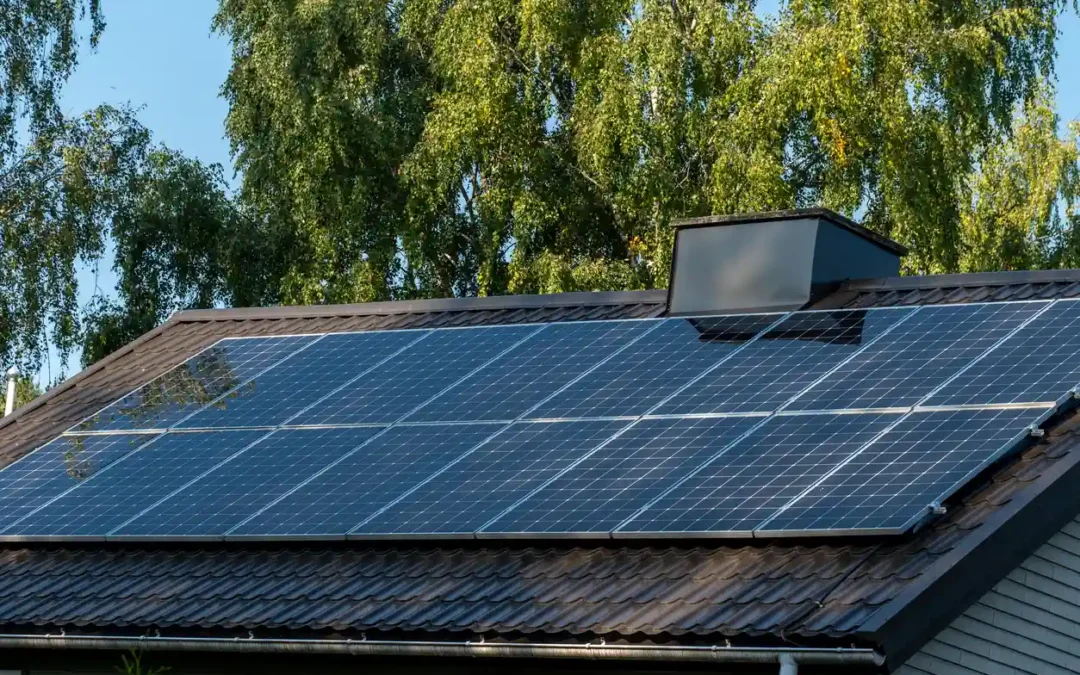
Solar panels and mounting racking systems often come with warranties spanning 25 years, yet your current commercial roof membrane might only have five years of operational life left. Installing a modern array over an aging system creates an expensive conflict down the road.
Building owners must carefully evaluate their existing commercial roofing systems to assess structural stability and membrane health before approving any renewable energy project. A successful installation requires a true 25-year roof marriage where both assets are matched for long-term durability.
Get a Professional Roof Evaluation
Start With the Roof, Not the Solar Array
Many building owners finalize solar designs before a single roofing technician steps foot on the deck. This sequence often leads to premature failures, voided warranties, and massive labor overruns later.
A roof that is technically functional today might fail five years into a 25-year solar contract. Once panels are mounted, simple roof maintenance becomes significantly more complex and expensive to perform.
When evaluating a site, technicians ask critical baseline questions:
- How old is the existing commercial membrane?
- What is its actual remaining service life under local weather exposure?
- Has the deck experienced chronic leaks, ponding water, or severe punctures?
- Are the insulation layers beneath the membrane compromised or saturated?
| Assessment Focus | Critical Evaluation Factor | Recommended Diagnostic Tool |
| Surface Integrity | Punctures, mechanical cuts, and membrane thinning | Visual physical walk-through inspection |
| Sub-Surface Quality | Saturated polyiso insulation layers | Non-destructive infrared moisture scan |
| Seam Strength | Degraded adhesives or separated hot-air welds | Seam probe testing along critical laps |
| Drainage and Slope | Water accumulation persisting past 48 hours | Laser level slope-to-drain mapping |
| Flashing and Curbs | Cracking, splitting, and voids at parapet walls | Detail inspection of all rooftop units |
Roof Age vs. Remaining Service Life
Calendar age alone does not tell the full story of membrane health. A 10-year-old roof with poor drainage might be in worse shape than a 15-year-old roof that received routine preventative care. Determining remaining service life requires looking past simple watertightness to assess seam strength, core thermal insulation, and total structural stability.
Know What Kind of Membrane You Are Working With
Commercial properties feature a wide variety of roofing materials, each reacting differently to added equipment. Identifying your specific system is essential before attaching mounting hardware.
Common commercial roofing membranes include:
- Thermoplastic Polyolefin (TPO): Single-ply reflective membranes.
- Polyvinyl Chloride (PVC): Chemical-resistant single-ply systems.
- Ethylene Propylene Diene Monomer (EPDM): Synthetic rubber sheets.
- Modified Bitumen: Multi-layer asphalt systems.
- Built-Up Roofing (BUR): Heavy-duty gravel and asphalt assemblies.
Different membranes require distinct attachment techniques, flashing details, and routine care strategies. Thermoplastic membranes like TPO allow direct hot-air welded boots, whereas EPDM requires specific liquid adhesives and uncured rubber details.
| Membrane Type | Primary Attachment Method | Foot Traffic Durability | Key Solar Consideration |
| TPO Single-Ply | Hot-air welded boots | Moderate | Offers high solar reflectivity but needs walk pads |
| PVC Single-Ply | Hot-air welded boots | High | Resists rooftop chemicals and grease exhaust |
| EPDM Rubber | Adhesive bonded flashings | High | Experiences thermal movement and absorbs high heat |
| Modified Bitumen | Torch or cold adhesives | Very High | Excellent puncture tolerance under ballasted blocks |
| Built-Up Roofing | Hot asphalt or cold mastic | Superior | Heavy assembly that requires careful load calculation |
Why Membrane Compatibility Matters
Installing solar equipment introduces structural penetrations, heavy ballast blocks, and sharp foot-traffic paths across your building. Roofing and solar components must work in tandem without trapping moisture or breaking waterproofing barriers.
Failing to verify manufacturer compatibility can instantly void your existing roof warranty. Always ensure the proposed installation methods are fully pre-approved by the primary roofing manufacturer.
Evaluate the Structural Mechanics and Stress Factors
Adding renewable equipment fundamentally alters how your roof operates, handles weather, and receives service. A roof is an active, flexible barrier that expands and contracts with daily temperature changes.
Key physical impacts include:
- Concentrated foot traffic from installation crews and routine electrical technicians.
- Staging heavy equipment and racking materials directly on vulnerable single-ply sheets.
- Adding mechanical penetrations that require custom, watertight flashings.
- Placing heavy ballasted concrete blocks that strain the roof weight capacity.
- Creating wind pockets beneath panels that increase local uplift forces.
| Rooftop Stress Factor | Source of Wear | Potential Structural Risk | Mitigation Measure |
| Mechanical Loads | Concrete ballast blocks | Crushed rigid insulation board | High-density cover boards |
| Foot Traffic | Maintenance crews | Scuffs, cuts, and membrane tears | Dedicated walkway pathways |
| Microclimates | Under-panel shaded zones | Retained moisture and mold | Regular drainage clearing |
| Uplift Forces | Wind vortices under arrays | Fastener pull-out at perimeters | Wind-tunnel rated attachments |
Under-panel microclimates can also retain moisture longer than exposed sections of the deck. This delayed drying can accelerate surface weathering if the membrane material is already degraded.
Schedule a Pre-Solar Structural Evaluation
Coordinate Roofing and Solar Warranties
Building owners often fall into a trap between the roofing manufacturer and the solar installer when leaks occur. Without clear documentation, each party may blame the other for water intrusion.
Before work begins, clarify these crucial coverage points:
- Does the original roofing manufacturer approve the solar attachment hardware?
- Who assumes direct financial liability for leaks originating at array penetration points?
- Are all roof penetrations being completed by a certified professional roofing contractor?
- Will the installation alter or void any existing wind or material warranties?
Working with an experienced contractor keeps your active warranties fully intact while preventing dispute bottlenecks down the line.
When Should You Repair, Restore, or Replace the Roof?
Choosing the right path depends on membrane age, structural deck integrity, and your long-term property goals. Discovering deck rot or membrane failure after racking is bolted down creates a financial nightmare.
If a roof with five years of remaining life fails in year seven, the entire solar array must be disconnected, dismantled, and safely stored off-site. Once the new roof is installed, the solar team must return to re-anchor and re-wire the system. This process essentially forces you to pay double for solar labor costs.
| Recommended Action | Membrane Condition | Substrate Moisture Level | Expected Added Life | Financial Treatment |
| Localized Repair | 15+ years of useful life | 0% core saturation | Restores original warranty period | Standard Operating Expense |
| Roof Restoration | 8 to 12 years of useful life | Isolated to less than 15% | 10 to 20 additional years | Tax-Deductible Maintenance |
| Full Replacement | Under 7 years of useful life | Widespread saturation (20%+) | Full 25 to 30 year warranty match | Capital Improvement Depreciation |
Path 1: Localized Repair
Localized repairs are appropriate when the membrane is relatively young and structurally sound. Fixing minor punctures or reinforcing aged seams ensures the barrier is tight before panels go up.
Path 2: Fluid-Applied Restoration
Restoration involves cleaning, repairing, and re-coating an existing membrane using liquid-applied systems such as silicone or acrylic over a dry, structurally sound substrate. This adds a seamless, fluid-applied barrier, improves solar reflection, and extends roof life by 10 to 20 years to match panel expectations.
Restoration delivers distinct financial advantages:
- Costs significantly less than a total tear-off.
- Generates zero landfill tipping fees or waste disposal delays.
- Creates minimal day-to-day operational disruption for occupants.
- Qualifies as a capital maintenance expense, allowing building owners to deduct the entire project cost within the current tax year rather than depreciating it over 39 years.
- Allows building owners to leverage incentives like the 179D commercial buildings deduction to offset energy-efficient upgrades.
Path 3: Full Roof Replacement
If the current system is near the end of its lifespan, harbors widespread substrate moisture, or exhibits advanced corrosion and structural sagging, a complete tear-off is the smartest path. Installing a fresh membrane alongside new solar equipment ensures both assets age safely together for the full 25-year lifecycle.
Most commercial building codes limit the total number of roof layers allowed on a commercial structure to two. If your facility already has two layers installed, codes mandate a complete tear-off before installing new materials.
Build a Roof-Solar Maintenance Plan for the Long Haul
Maintaining an integrated solar roof requires a long-term strategy. You cannot simply install panels and ignore the surface for the next two decades.
Key elements of a unified maintenance strategy include:
- Scheduled semi-annual inspections every spring and autumn.
- Keeping internal drains, scuppers, and gutters completely free of debris.
- Installing walkway pads along primary electrical service routes.
- Documenting every repair and keeping clear logs for warranty compliance.
- Performing infrared scans after major severe weather events to spot micro-punctures early.
Establishing a single point of contact for roof care ensures small issues are caught before they disrupt your energy production.
Partner With Trade Experts Before You Install
Combining commercial roof restoration or replacement with solar integration protects both investments for the next quarter-century. Taking the time to evaluate membrane durability, load capacities, and thermal movement upfront saves facility managers from costly tear-offs and voided warranties later.
For over 15 years, Delta Innovative Services has provided union-level craftsmanship and advanced structural diagnostic assessments across the Kansas City area. Our certified field crews deliver honest technical data to ensure your rooftop infrastructure is fully prepared before a single solar panel is anchored.
Contact Our Commercial Roofing Team
Frequently Asked Questions
Can Solar Panels Be Installed On An Older Commercial Roof?
Yes, provided the membrane is structurally sound, watertight, and capable of supporting added weight. If the roof has less than 10 years of life left, it should be restored or replaced before mounting equipment.
What Happens If The Roof Needs To Be Replaced After Solar Panels Are Installed?
The solar array must be decommissioned, unbolted, and stored off-site while the new roof is installed. This process adds substantial labor costs and halts renewable energy generation during the construction window.
How Does Solar Panel Shading Affect Roof Membrane Health?
Under-panel shaded zones create microclimates that retain moisture longer than exposed sections. Routine maintenance must ensure these areas remain free of organic debris and ponding water to avoid premature membrane degradation.